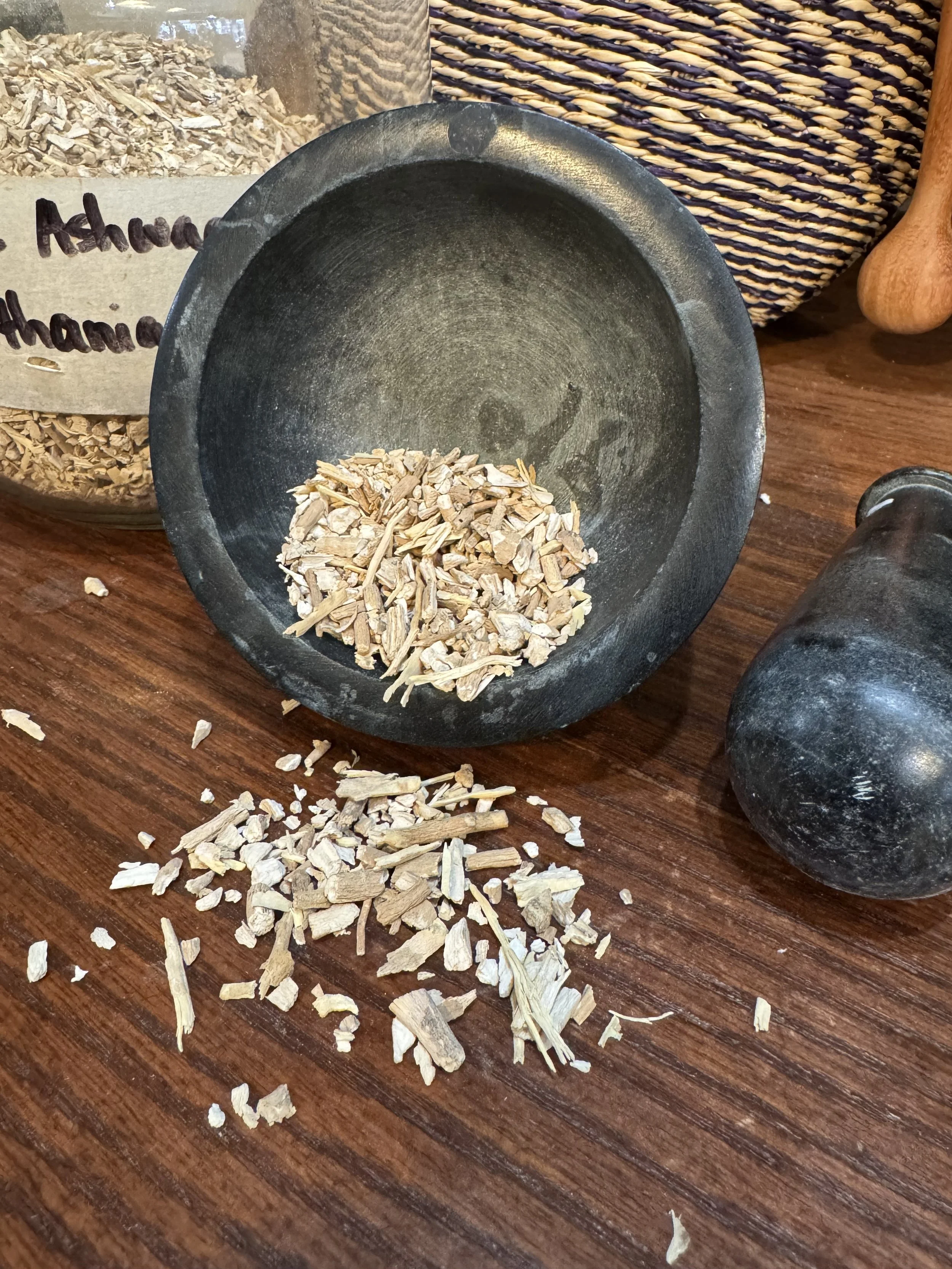
Ashwagandha Root (Withania somnifera)
Ashwagandha is a deeply nourishing root traditionally used in Ayurvedic herbalism to support resilience, vitality, and balance during periods of stress or depletion. Native to India and surrounding regions, it is classified as a rasayana, or rejuvenative herb, meaning it is used to build strength and restore the body over time. The root is the primary part used and is commonly prepared as a powder, decoction, or tincture.
Unlike stimulating herbs, ashwagandha is considered calming and restorative, making it especially suitable for individuals experiencing chronic stress, fatigue, or nervous system exhaustion.
Ashwagandha’s primary active constituents are withanolides, a group of steroidal lactones associated with its adaptogenic properties. Additional constituents include alkaloids, saponins, amino acids, and trace minerals such as iron. These compounds contribute to its traditional use as a tonic for the nervous, endocrine, and immune systems.
In herbal practice, ashwagandha is classified as an adaptogen, supporting the body’s ability to respond to stress and maintain balance. It is also considered a nervine, traditionally used to calm the mind and support restful sleep, and a tonic, meaning it nourishes and strengthens over time rather than producing immediate effects. Many herbalists describe ashwagandha as both grounding and stabilizing, helping to settle anxious energy while gently supporting stamina.
Ashwagandha is often used consistently over weeks or months, especially during periods of long-term stress, recovery, or transition. It is commonly blended with warming or digestive-supportive herbs to improve absorption and compatibility. Its effects are subtle but cumulative, making it a valued ally for long-term balance and restoration.