
Eleuthero Root (Eleuterococcus senticocus)
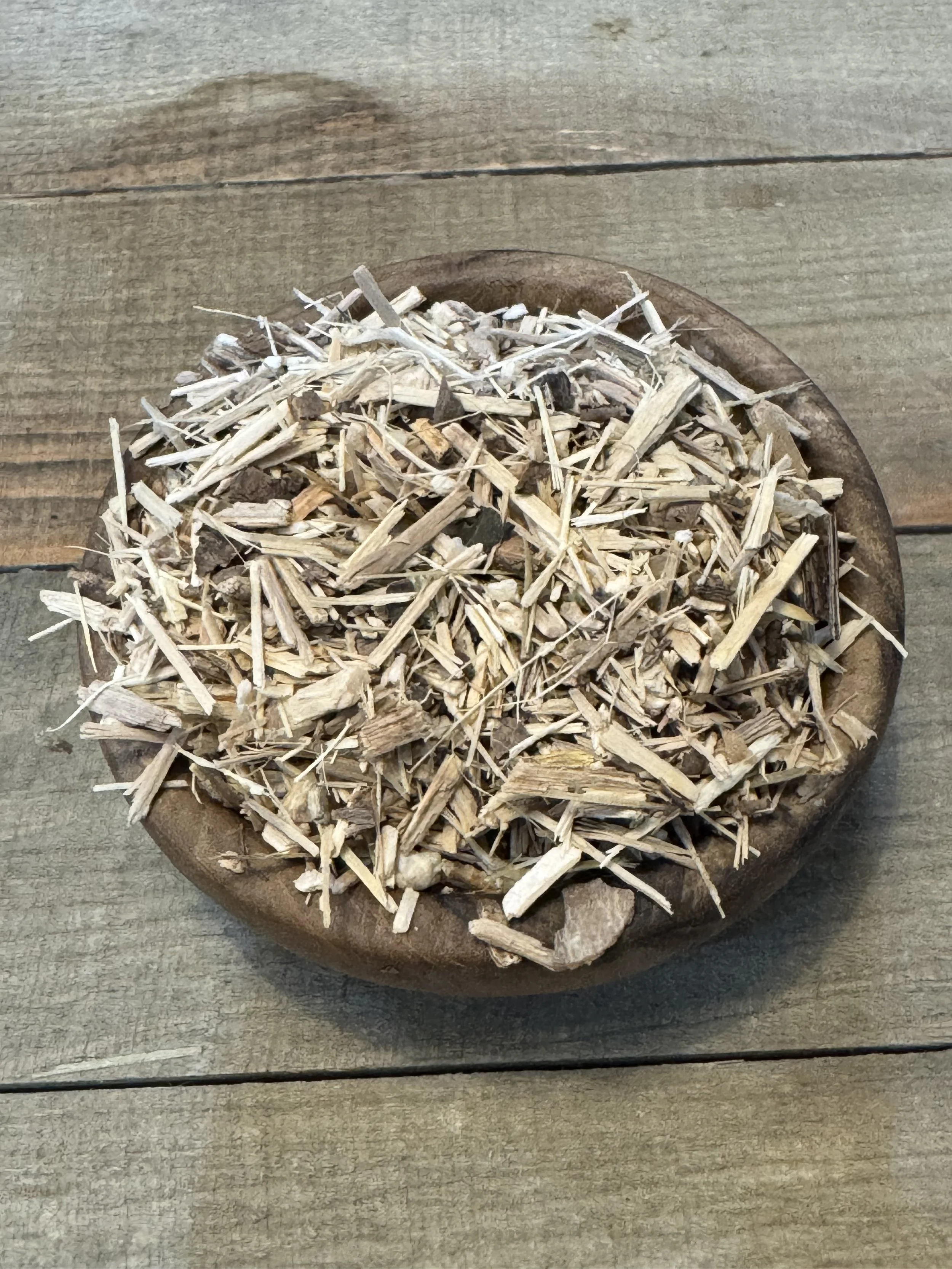
Eleuthero, commonly known as Siberian ginseng, is a hardy shrub native to northern Asia and Russia. Although not a true ginseng, eleuthero has a long history of traditional use as a strengthening and resilience-building herb. The root is the primary part used and is typically prepared as a tincture or decoction.
Eleuthero became widely known in the 20th century through Russian research focused on endurance, stamina, and stress tolerance. Traditionally, it has been used to support individuals facing prolonged physical or mental demands, seasonal stress, or general fatigue.
The main active constituents of eleuthero include eleutherosides, unique glycosides believed to contribute to its adaptogenic action. Additional constituents include polysaccharides, lignans, and phenolic compounds, which support its tonic and immune-modulating properties.
In herbalism, eleuthero is classified as an adaptogen, traditionally used to help the body respond to stress and recover from exertion. It is also considered a tonic herb, offering steady, long-term support rather than quick stimulation. Unlike caffeine-like herbs, eleuthero supports sustained energy and resilience without causing spikes or crashes.
Energetically, eleuthero is slightly warming and drying, making it especially useful for individuals who feel fatigued, depleted, or run down. It is commonly used during colder months or demanding life periods. Eleuthero is often combined with other adaptogens such as astragalus or schisandra to create balanced formulas that support endurance and seasonal resilience. Consistent use over time is traditionally recommended to experience its full benefits.